
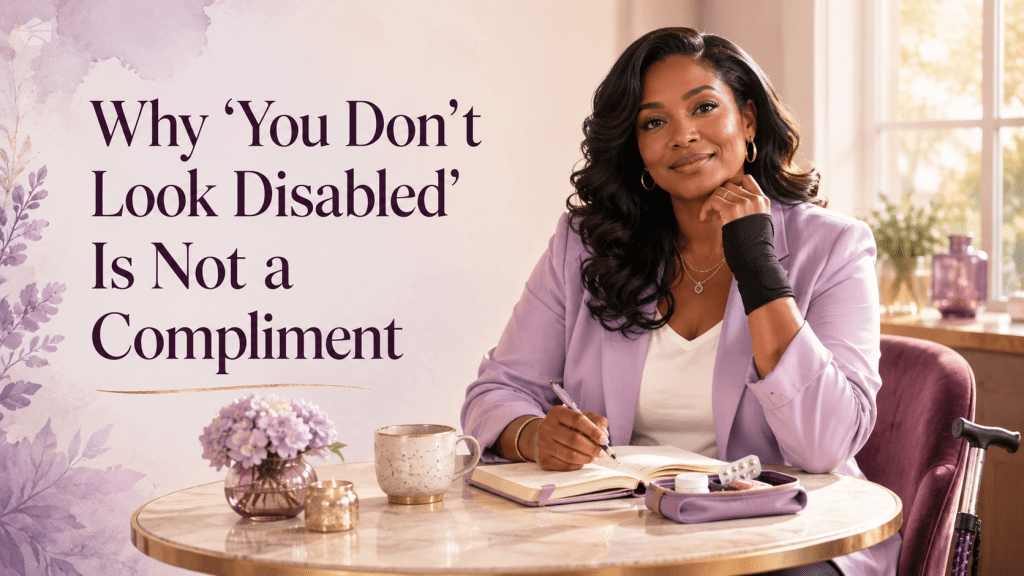
“You don’t look disabled.”
The words are often spoken with surprise. Sometimes, they are even offered as reassurance—as though not appearing disabled should make someone feel better.
But for many people living with disabilities, this statement is not comforting. It can feel dismissive, intrusive, and painfully invalidating.
Disability does not have one appearance. It does not always use a wheelchair, carry a white cane, or leave a visible mark on the body. Many disabilities exist beneath the surface, affecting a person’s pain, energy, mobility, concentration, breathing, mental health, or ability to complete everyday tasks.
A person may look well and still be fighting a battle you cannot see.
Disability Does Not Have a Certain Look
Society often presents a limited picture of disability.
When some people hear the word “disabled,” they imagine a particular body, diagnosis, or mobility aid. If someone does not match that image, their disability may be questioned.
However, disabilities can be visible, invisible, permanent, temporary, progressive, or unpredictable. They may affect people differently from one hour—or one day—to the next.
Someone may walk into a store but need a wheelchair for longer distances. A person may laugh with friends while managing intense pain. Someone may work, travel, raise children, or run a business while living with a serious medical condition.
There is no single way to look disabled.
It Can Sound Like Disbelief
When someone says, “You don’t look disabled,” the unspoken message can feel like:
“I am not sure I believe you.”
That can be deeply painful, especially for someone who has already spent years trying to have doctors, employers, relatives, or strangers take their symptoms seriously.
Many people with invisible disabilities are repeatedly asked to prove that they are struggling. They may have to explain why they need an accessible parking space, extra time, seating, schedule flexibility, or other accommodations.
No one should have to perform pain to be believed.
A person should not need to reveal their medical history or describe their most difficult moments to justify the support they need.
Looking Well Does Not Mean Feeling Well
A photograph captures a second. A smile reveals a moment. Neither tells the complete story.
Someone may carefully prepare for an outing, use medication to manage their symptoms, or spend days resting beforehand. What others see as an effortless appearance may represent courage, planning, sacrifice, and recovery that remain hidden.
A person can wear makeup and still be in pain.
They can smile and still be exhausted.
They can enjoy a beautiful moment and still be disabled.
Joy and disability can exist together. So can strength and struggle. One does not erase the other.
The Word “Disabled” Is Not an Insult
The phrase can also suggest that looking disabled would be something negative.
When “You don’t look disabled” is presented as praise, it may carry the assumption that disability is unattractive, undesirable, or shameful. But disabled bodies are not inferior bodies. Mobility aids are not symbols of failure. Needing support does not diminish a person’s dignity.
Disability is not a moral weakness or a personal flaw.
Some people prefer identity-first language, such as “disabled person,” while others prefer person-first language, such as “person with a disability.” The respectful choice is to listen to how an individual describes themselves.
What matters most is recognizing their full humanity—not treating disability as something embarrassing that must be hidden.
It Places the Focus on Appearance
Comments about whether someone “looks disabled” turn a personal reality into a judgment based on appearance.
The speaker becomes the person deciding what disability should look like. Meanwhile, the disabled person may feel pressured to explain private details or defend their own experience.
Instead of questioning someone’s appearance, listen to what they tell you.
If a person says they are in pain, believe them.
If they say they need to rest, respect them.
If they request an accommodation, do not make them feel guilty for asking.
Compassion does not require complete understanding. It begins with trust.
What Can You Say Instead?
If someone shares that they have a disability, you do not need to comment on whether you noticed it. You can respond with kindness and openness.
Consider saying:
- “Thank you for trusting me with that.”
- “Is there anything I can do to support you?”
- “What would make this more accessible for you?”
- “I may not fully understand, but I am willing to listen.”
- “You do not have to explain anything you are uncomfortable sharing.”
- “I believe you.”
These responses leave room for the person to guide the conversation. They offer support without demanding private information.
Sometimes, the most meaningful response is simply to listen.
Believe People Without Requiring Proof
Living with an invisible disability can be lonely. It can feel like carrying something heavy while the world insists your hands are empty.
People may see the smile but not the recovery afterward. They may see someone standing but not know how much pain it causes. They may see a productive day without witnessing the days of exhaustion surrounding it.
We never know the complete story by looking at someone.
That is why kindness must go deeper than appearances.
The next time someone tells you they are disabled, resist the urge to measure their experience against what you expected to see. Their truth does not require your visual confirmation.
Believe them.
Respect their boundaries.
Ask what support looks like.
“You don’t look disabled” may be intended as a compliment, but “I believe you” is far more powerful. It tells someone they do not have to prove their pain, defend their needs, or become visibly unwell before they deserve compassion.
Disability is not always something the eyes can recognize.
But dignity, understanding, and kindness are choices every heart can make.
With love & light,
Crystal Amon
Princess Crystal Says
Copyright 2026

📧 princesscrystalsays@gmail.com
🌐 princesscrystalsays.com
📰 crystalamonwriter.com
📚 amazon.com/author/crystalamon


Leave a Reply